Food Science
The $10 Upgrade That Makes Your Food Containers Last 20 Years
By the SealPod team · 5 min read
Food Science
By the SealPod team · 5 min read
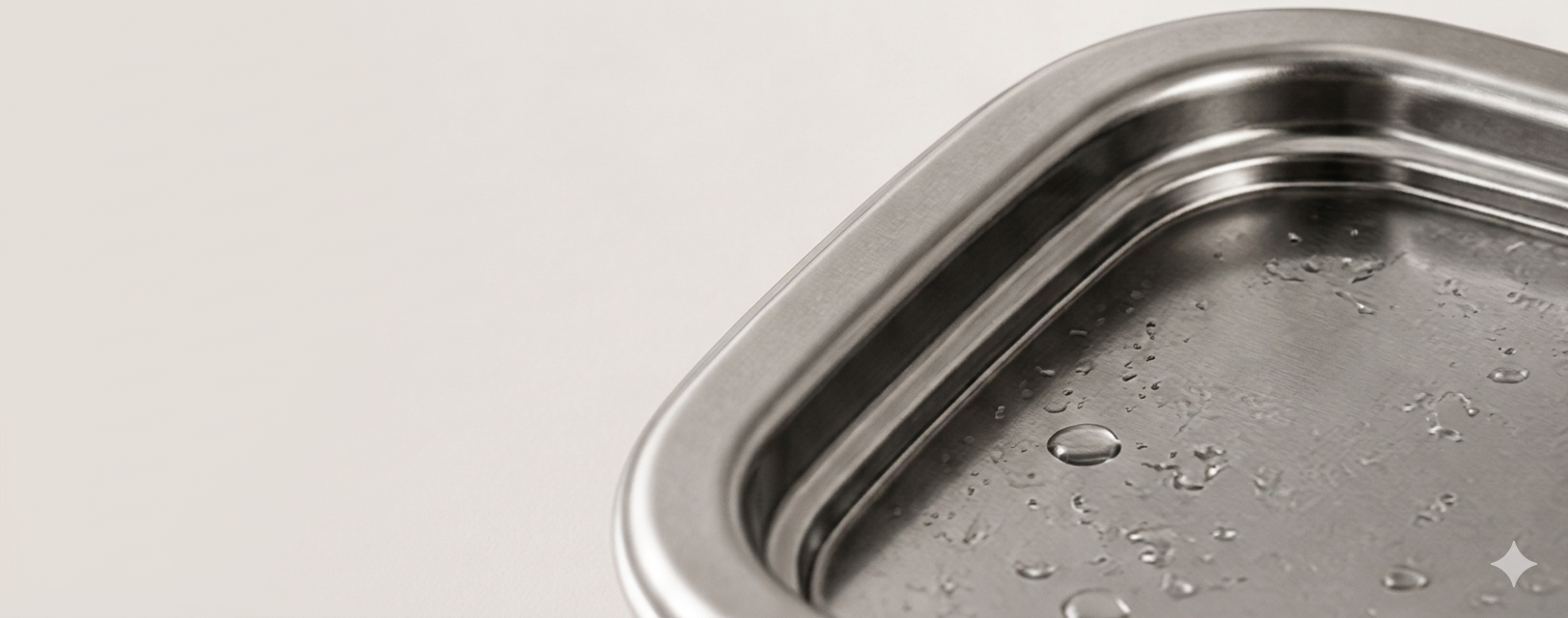
Walk down the food storage aisle and almost every stainless steel product will be labeled "food safe." Technically true—but the term hides a meaningful gap between the two most common grades, 304 and 316. The difference shows up in how the container ages, how it handles acidic foods, and whether it still performs like new after years of use.
304 stainless steel is a solid general-purpose alloy. 316 stainless steel is the upgraded grade used in professional kitchens, medical equipment, and marine environments. Both contain chromium and nickel, but 316 adds molybdenum—a small chemistry change with outsized consequences for corrosion resistance.
01
Roughly 18% chromium and 8% nickel. Resists rust and tarnishing under normal conditions. The default grade for most consumer food storage and cookware.
02
Adds 2–3% molybdenum to a similar chromium/nickel base. Molybdenum dramatically improves resistance to chlorides, acids, and salt. Often called marine-grade or chef-grade.
Food is more chemically aggressive than people realize. Tomato sauces, citrus marinades, vinegar dressings, salty brines—all of these can slowly attack metal surfaces. 304 handles them fine for occasional contact. 316 handles them for years of daily contact without pitting, staining, or developing a metallic taste.
"If your container is going to hold lemon, tomato, or brine on a regular basis, 316 is not a luxury. It's the right specification."
For dry storage, occasional use, or items that don't sit in acidic environments, 304 performs perfectly well. It's the right choice for a budget-conscious buyer storing crackers, coffee beans, or dry pasta.
Reputable manufacturers state the grade clearly—usually printed on the base or in the product specifications. If a product just says "stainless steel" with no grade specified, assume the cheaper alloy. The difference in cost is small. The difference in lifetime performance is not.
Premium stainless steel, vacuum-sealed for freshness that lasts.
Shop the collection